Micron's CEO Says the Memory Cycle Is Dead. AI Killed It.
Sanjay Mehrotra picked a striking moment to bury a 40-year pattern. In remarks reported August 21, 2026 by Developpez.com, the Micron chief executive declared that the memory industry's violent rhythm of glut and shortage is finished, replaced by something structurally hungrier. His framing is blunt: “Today there is no AI without memory. AI systems need more memory. They need higher-performing memory. They need less power-hungry memory.” Then the kicker: the value equation for memory has completely changed.
The résumé behind the claim
Mehrotra is not a tourist. He cofounded SanDisk, ran it from 2011 until Western Digital acquired it in 2016, and has spent four decades across Intel, Atmel, SEEQ Technology and Integrated Device Technology. When he calls memory “strategic infrastructure of the AI era,” the argument rests on demand he describes as durable: data centers, autonomous vehicles, robots, consumer devices. Not one customer class. Four.
“Memory is now essential. That is why I call it strategic infrastructure of the AI era.”
The numbers doing the talking
His supply math is the actual story:
- Data center customers want roughly 50% more memory than Micron can guarantee them.
- Forecasts from January 2026 put data centers at 70% of all memory chips fabricated in 2026.
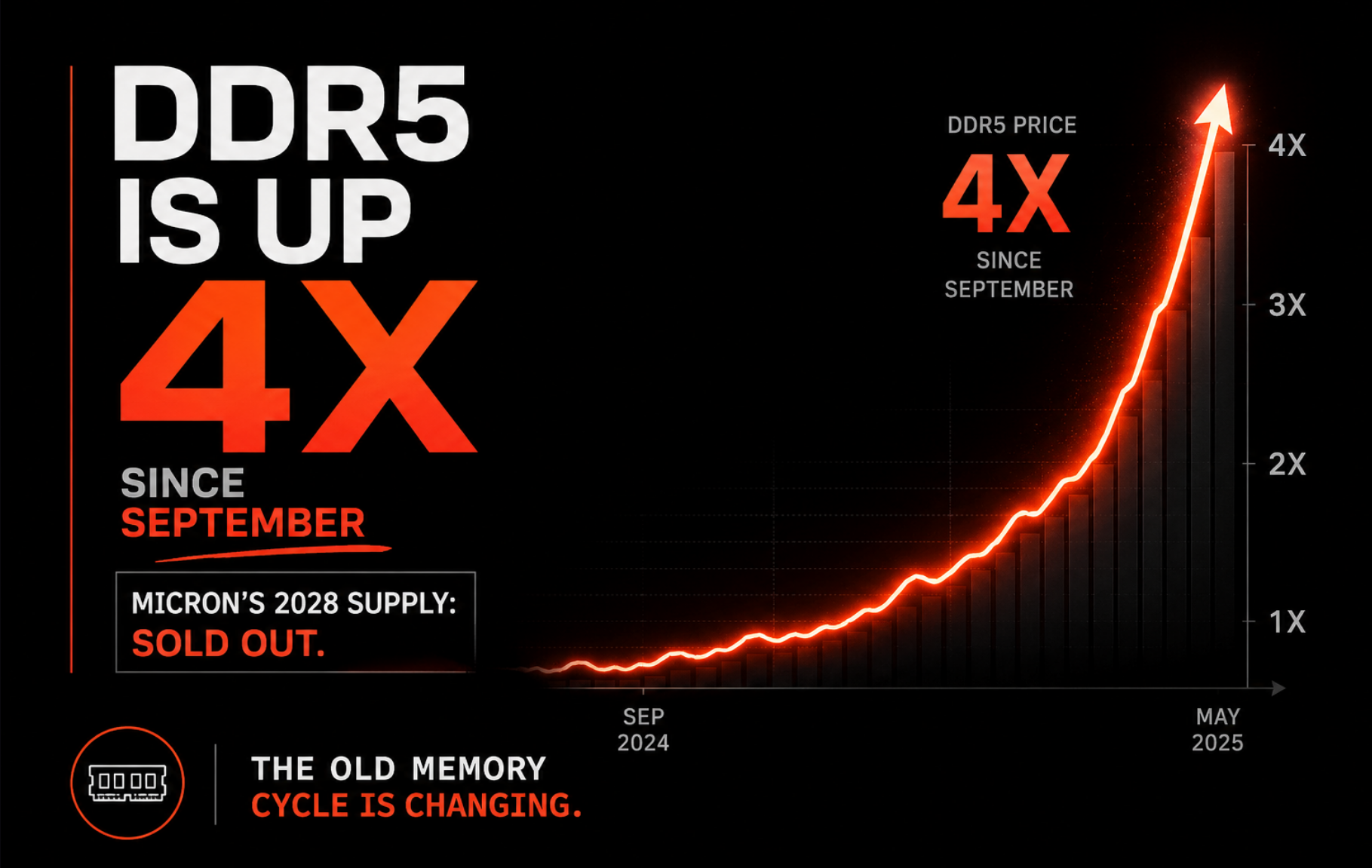
- The RAM shortage is projected to run until at least 2029, because global capacity for 2028 is already sold before a single wafer exists.
- DDR5 pricing has more than quadrupled since September 2025.
The spillover is visible now. Smartphones, connected devices, consoles and PCs compete for whatever silicon the AI buildout leaves behind, and the Developpez.com report suggests consumers could face even more extreme prices by 2030.
Digging out with shovels
Micron's answer is physical. The company plans $250 billion in US manufacturing and R&D, anchored by a complex beside its Boise, Idaho headquarters: two fabs, each the size of ten American football fields, with the first wafers targeted for mid-2027. Even at that scale, closing a 50% demand gap takes years, not quarters.
The honest caveat
Every memory executive in history has pronounced the cycle dead near a peak. What differs now is the shape of demand: multi-year contracts instead of speculative channel stuffing. If AI capital spending holds its trajectory, Mehrotra's obituary for the boom-bust cycle stands. If it blinks, the industry's oldest habit returns with interest.